
Teaching Music Literacy Through Storytelling: An Engaging Lesson with Mortimer by Robert Munsch
Tell a student a fact, and they’ll remember it for a day.
Tell a student a story, and they’ll remember it for life.
Stories are an incredible teaching tool in the elementary music classroom, and Mortimer by Robert Munsch is one of my favorites! This hilarious and engaging book provides the perfect opportunity for students to:
- Sing and match pitch
- Practice steady beat
- Demonstrate high, medium, and low voices
- Explore solfege and hand signs
- Develop musical expression through dynamics and articulation
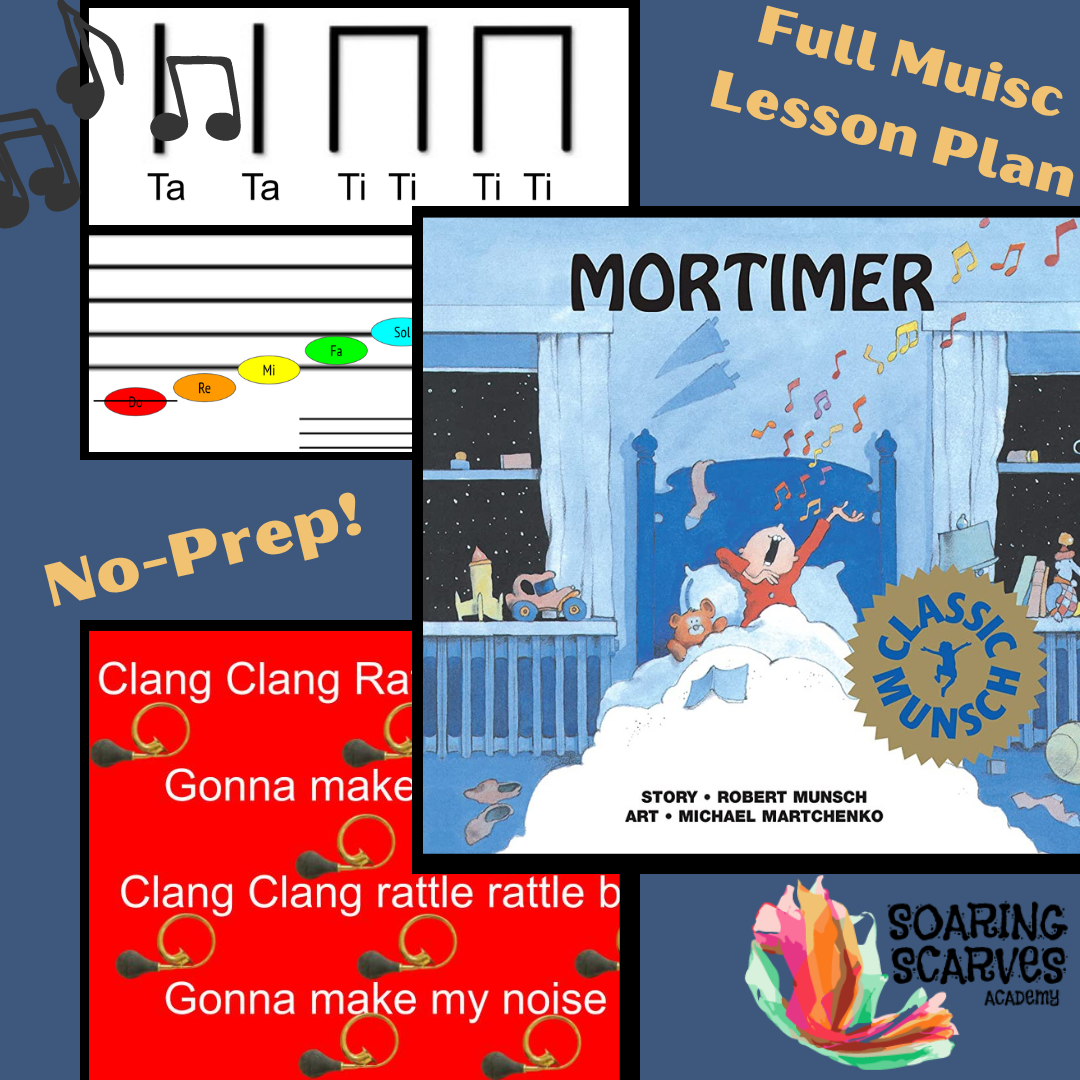
Step 1: Introduce Solfège Through Engaging Activities
Before diving into the story, review solfège with your students in a fun and interactive way. Solfège (Do, Re, Mi, etc.) helps students build pitch awareness, internalize melodies, and develop their ear for music.
Here are a few engaging ways to introduce or review solfège:
- Hand Signs & Body Movements – Use Curwen hand signs to visually and physically represent each pitch. For extra engagement, have students match each pitch to a movement (e.g., standing tall for Sol, bending for Mi, squatting for Do).
- Call & Response Singing – Sing short solfège phrases and have students echo them back. Start simple (Do-Mi-Sol), then add complexity as they grow more confident.
- Color Connections – Associate solfège syllables with colors, Boomwhackers, or visual aids to reinforce learning.
Once students feel comfortable with solfège, introduce the song used in the video walkthrough below. This will set the foundation for incorporating solfège throughout the story!
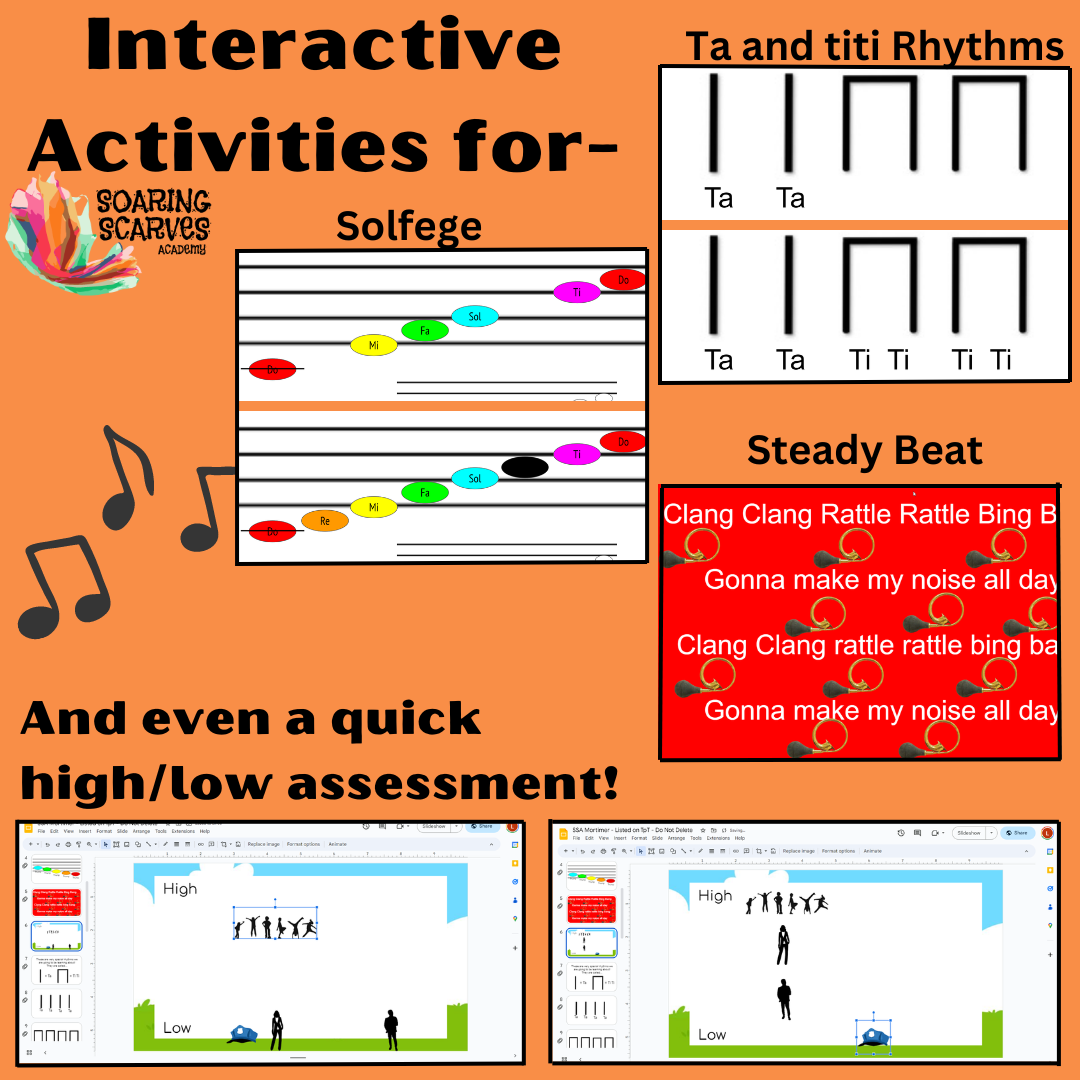
Step 2: Sing, Move, and Feel the Beat
First, students repeat the song after me. Then, we march, jump, or walk to feel the steady beat.
Next, we use the interactive Google Slides to click and add trumpets at the right moments. This keeps students engaged while helping them lock in the steady beat in a fun and simple way.
Now that they know the song, it’s time for the story!
Step 3: Bringing the Story to Life with Music
Throughout Mortimer, different characters climb the stairs to tell him to “Be Quiet!” Each character presents a great opportunity to practice vocal pitch and solfege hand signs.
- As the character climbs the stairs, move through the solfege hand signs from Do to Sol.
- When they go back down, reverse the pattern.
Each character speaks in a different vocal register, providing a fun way to explore vocal expression:
- Mom – Use a “mommy” voice with a wagging finger (medium-high voice).
- Dad – Demonstrate a deeper, “daddy” voice (medium-low voice).
- 17 Brothers and Sisters – Use a high-pitched voice.
- Police Officers – Use your lowest voice for a dramatic effect.
Step 4: Expressive Singing & Musical Concepts
Between each character’s command, Mortimer sings his song—this is a great chance to reinforce musical concepts:
- Change the dynamics (sing it quietly, then loudly).
- Alter the tempo (try it fast, then slow).
- Explore articulation (sing it staccato or legato).
Students will stay engaged as they anticipate how they’ll have to sing the next version of Mortimer’s song!
Step 5: Quick & Fun Assessment
At the end of the story, check for understanding with a quick high, medium, and low voice sorting activity.
- If you have a Smartboard, students can drag the characters to the correct vocal range.
- If using paper, print out images of the characters and have students sort them into high, medium, and low voice groups.
Don't forget to Add a Scarf Dance- Check Out One For Free Here
Make Music Learning Memorable with Mortimer!
Bringing Mortimer into your music classroom is a fun and engaging way to teach essential music skills like solfège, steady beat, high and low voices, and musical expression—all through a silly and memorable story.
With its repeating patterns, dynamic character voices, and interactive elements, this lesson keeps students fully engaged while reinforcing fundamental music concepts.
Want to save time and get everything ready to go? Sign up for a FREE month of the Soaring Scarves Curriculum to access the full lesson plan, Google Slides, assessments, and 20+ scarf dances to keep your students moving and learning!
Grab this Lesson for Included with a Free Month Trial of Our Membership!
Check Out Some of Our Other Articles Here
Back-to-School Music Lessons and Free Resources for Elementary Music Teachers
Free Back-to-School Music Teacher Resources + Summer of Free Trial Back-to-School Resource Hub Back-to-School Music Lessons and Free Resources for Elementary Music Teachers The beginning of the school year can feel exciting, overwhelming, and a little chaotic all at...
No-Prep Back-to-School Music Lesson for Grades K–2: Monkey Puzzle Activities for Rhythm, Solfege & Movement
Back-to-School Music Lesson: Monkey Puzzle If you're anything like me, the beginning of the school year is all about one thing: finding out what your students remember while helping them fall back in love with music class. That's exactly why I love using Monkey...
Easy Back-to-School Music Lesson for Grades 2–4 (Dynamics, Rhythm & Movement)
Back-to-School Music Lesson: The Quiet Forest for Dynamics, Rhythm & Movement The beginning of the school year is one of my favorite times to bring storybooks into the elementary music classroom. Not because I'm trying to teach something brand new. Because I want...
30-Second Movement Breaks for Elementary Music Teachers: Easy Classroom Management Ideas
The 30-Second Movement Formula One of the biggest misconceptions about classroom movement is that it has to take a long time to make a difference. It doesn't. Some of the most effective movement moments in my classroom take less than 30 seconds. In fact, some of my...
Back-to-School Music Lesson for Kindergarten: Tap the Magic Tree, Movement, Solfege & Steady Beat
Tap the Magic Tree: A Movement-Filled Music Lesson for Kindergarten and First Grade If you are looking for a story that practically begs students to get up and move, Tap the Magic Tree by Christie Matheson might just become one of your favorite books to bring into the...
Why Movement Breaks Fail in the Elementary Music Classroom (And How to Fix Them)
Why it Fails and How to Fix! If you've ever tried adding movement to your elementary music classroom only to have the class somehow become more chaotic, you're not alone. A lot of music teachers are told to "just add movement," but nobody really talks about why...
Play the Movie and Keep the Learning Going: A No-Prep Superworm Music Lesson for Elementary Students
Superworm for Elementary Music (Movement, Solfege, Rhythm & Movie Day!) Hello, elementary music teachers. It's May. How are we doing? No really- How are we doing? Because if you're anything like I was in May, you're trying to keep students engaged, keep learning...
Elementary Music Teachers: It’s Okay to Play the Movie at the End of the Year
Keep Them Learning Along with the Movie! Play the movie. Your students may have earned it… but honestly? You have earned it! The end of the school year is a strange mix of excitement, exhaustion, field trips, missing pencils, mystery schedules, and students who...
No-Prep End of Year Music Lesson: Peter and the Wolf for Elementary Music (Sub-Plan, Movement, Listening & Assessment Included!)
Keep Them Learning Before the Movie! Alright—if you are at that point in the year where you are this close to summer and you’re thinking, “Can I just put on a movie?”… I hear you. I really do. But what if you could still give your students that Peter and the Wolf...
3 No-Prep End-of-Year Music Lessons That Actually Work (Movement, Rhythm & Engagement Built In)
No-Prep End of Year Music Lessons for K–5 Hello, elementary music teachers—it is the end of the school year, and if you’re anything like me, you’re trying to keep things engaging, meaningful, and honestly… manageable. So here’s exactly what I do. These are three of my...